

Garage Flooring A Guide to Options & Costs
After more than 30 years fitting floors across London and the Home Counties, I’ve watched the humble garage change completely. Twenty years ago, most of the garages I worked on stored a car, a lawnmower, and about fifteen years of paint tins. Today I’m just as likely to be quoting for a home gym, a workshop, a home office, or a proper space for an EV.
And the flooring has to keep up. Garage floors bring challenges you simply don’t get in a living room. Damp concrete, oil spills, heavy point loads, tyre marks and temperature swings all need to be considered. Here’s my honest take on what works, what doesn’t, and how to spend your money wisely.
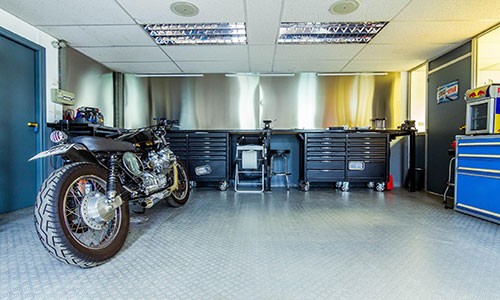
In Short: The Quick Version
If you only read one section, read this one.
- Four main types: resin coatings (epoxy or polyaspartic), interlocking tiles, vinyl or rubber rolls, and floor paint.
- The right choice comes down to three things: how you use the garage, the condition of the concrete, and your budget including prep.
- Best all-rounder for a domestic garage: interlocking PVC tiles. Best for a home gym: rubber. Best for a workshop: polyaspartic coating. Tight budget: quality floor paint, properly prepped.
- Prep makes or breaks every garage floor. The most common cause of failure is ignoring damp in the slab.
- Charging an EV? Watch for hot tyre pickup, where cheap paint and coatings lift off with the tyre. Proper resin systems resist it.
What Do We Actually Mean by Garage Flooring?
Garage flooring is any covering or coating applied over the bare concrete slab of a garage to make it more durable, easier to clean, safer underfoot and better looking. It broadly falls into four categories:
- Epoxy or polyaspartic resin coatings: a liquid coating that cures into a hard, seamless surface.
- Interlocking tiles: rigid PVC, rubber or polymer tiles that clip together.
- Vinyl or rubber roll flooring: large rolls laid loose or glued down.
- Floor paint: the budget option, essentially a heavy-duty coating.
Each has its place. The right one depends on what you’re using the garage for, your budget, and the condition of your existing concrete.
Which Garage Floor Is Best for How You’ll Use the Space?
The type you choose depends heavily on the job the garage has to do.
Parking and general storage
If you’re mainly parking a car and storing bits and pieces, interlocking tiles or a mid-range epoxy coating will do the job beautifully. Both handle tyre traffic and cope with the occasional dropped tool.
Home gyms
Rubber is the standout. It gives a little underfoot, absorbs impact from dropped weights, and is quiet. I’ve fitted several converted garage gyms across Surrey and Hertfordshire, and rubber wins every time. If a home gym is your plan, our home gym flooring guide and rubber flooring guide go deeper on thickness, density and fit.
Workshops
Epoxy or polyaspartic coatings are hard to beat here. They resist chemicals, oil, solvents and paint spills, and you can sweep or mop them clean in minutes.
EV charging and modern use
If you’re charging an electric vehicle, take note. High-torque tyres can cause hot tyre pickup, where cheap paint or coatings literally lift off with the tyre. Proper epoxy or polyaspartic systems are designed to resist this. It’s one of the clearest cases where spending a little more upfront saves a full re-do.
The Honest Pros and Cons of Each Option
Epoxy and Polyaspartic Coatings
Pros:
- Seamless finish with no gaps for dirt or moisture
- Excellent chemical, oil and stain resistance
- Handles heavy loads and hot tyres
- Looks genuinely smart, especially with flake finishes
- Low maintenance, as a hose and mop is usually enough
Cons:
- Surface prep is everything, and it isn’t quick
- Needs a dry, sound concrete base
- Difficult to repair invisibly if damaged
- Higher upfront cost, especially professionally installed
- Damp slabs will ruin the finish, so don’t skip moisture testing
Interlocking Tiles
Pros:
- Genuine DIY installation with no adhesive or screed
- Can go over slightly damaged or uneven concrete
- Individual tiles lift out and replace
- Textured surfaces reduce slipping
- Often somewhat waterproof, so frequently no need for a separate damp membrane
Cons:
- Visible seams (some people mind, some don’t)
- Cheaper tiles can flex or discolour
- Higher upfront cost than paint
Vinyl or Rubber Rolls
Pros:
- Fast to install
- Protect the slab from spills and impact
- Rubber is quiet and comfortable underfoot
- For heavier-use spaces, heavy-duty vinyl is worth a look
Cons:
- Rolls can trap moisture underneath if the slab isn’t dry
- Smooth vinyl can be slippery when wet
- Not as tough as epoxy for heavy workshop use
Floor Paint
Pros:
- Cheapest option by a mile
- Straightforward DIY project
- Instantly tidies up a tired-looking garage
Cons:
- Least durable, as it chips, peels and wears through
- Prone to hot tyre pickup
- Needs re-doing every few years
- Prep still matters, and degreasing is non-negotiable
How Much Does Garage Flooring Cost?
Prices vary with garage size, slab condition and finish, so rather than quote firm numbers I’ll give you the honest ranking from cheapest to most expensive:
- DIY floor paint (budget)
- Basic tiles or laminate, for non-parking use only (low to mid)
- Interlocking PVC or rubber tiles (mid-range)
- Vinyl or rubber rolls (mid-range)
- Porcelain tiles, rarely used in domestic garages (mid to high)
- Professionally installed epoxy or polyaspartic (highest)
The rule of thumb: if the budget is tight and the garage sees light use, paint or basic tiles get you a long way. If you’re kitting out a gym, workshop or EV space you’ll use daily, spend the money once on a proper system. And whatever the quote, add around 20% for surface preparation you probably haven’t budgeted for.
Installation: What Actually Matters
This is where I see the most mistakes. Whichever product you choose, prep makes or breaks it.
Check for damp first
Concrete garage slabs are often laid straight onto the ground with no damp-proof membrane. Before you install anything non-breathable, do a simple moisture test. Tape a square of plastic sheeting (around 60cm x 60cm) to the floor and leave it 48 hours. If you see condensation underneath, you’ve got a moisture problem.
If the slab is damp, you have two sensible routes:
- Use vented interlocking tiles that allow airflow underneath, or
- Apply a moisture-blocking primer before any coating.
Ignoring damp is the single most common reason garage floors fail.
Level the surface
Deep cracks, pitting or spalling (flaking of the concrete surface) need patching with a proper high-strength repair compound before any covering goes down. Otherwise the defects telegraph through, especially with thinner rolls or coatings.
Degrease thoroughly
Old oil stains are the enemy, because nothing bonds to oil. A proper degreaser and a stiff brush, then a full rinse and dry, is essential before any paint or coating.
Use the right tools
Fitting interlocking tiles? Use a rubber mallet, never a claw hammer. I’ve seen more than one DIY installation ruined by cracked tile edges from someone getting overenthusiastic.
How Long Does Garage Flooring Last?
Here’s what to expect day to day, and how long each should serve you with proper installation:
- Epoxy or polyaspartic: sweep, then mop with warm water and mild detergent, and avoid harsh solvents. Expect 10–20+ years.
- Interlocking tiles: lift and hose down if needed, and replace damaged tiles individually. Expect 10–15 years.
- Vinyl or rubber rolls: sweep and mop, and check edges for lifting. Expect 8–15 years.
- Floor paint: sweep and mop gently, and expect to recoat every 3–5 years depending on use.
The Common Mistakes I See Most Often
- Skipping the moisture test, then wondering why the coating bubbles.
- Painting over oil stains, so the paint peels off with the first tyre pull.
- Choosing thin, cheap tiles for a garage that gets vehicle traffic.
- Not accounting for door clearance. Some tiles are 15–20mm thick, and your garage door still needs to open cleanly.
- Buying on price alone. A £200 saving now becomes a £1,500 problem in two years.
How to Choose the Right Garage Floor
Here’s the shortlist I run through with customers:
- What’s the garage used for? Parking, gym, workshop, or mixed use?
- What’s the concrete like? Sound and dry, or cracked and damp?
- How much traffic? A daily EV in and out, or the occasional weekend car?
- DIY or professional install? Tiles suit DIY, but resin coatings really don’t.
- What’s the budget, including prep? Add 20% for surface preparation.
- How long do you want it to last? Longer lifespan usually means higher upfront cost.
And my quick recommendations by scenario:
- Best all-rounder for a domestic garage: interlocking PVC tiles.
- Best for a home gym: rubber tiles or rubber rolls.
- Best for workshops and serious use: polyaspartic coating.
- Best on a tight budget: quality floor paint, properly prepped.
- Best for a showroom-style finish: epoxy with decorative flake.
For a wider view across every flooring type, not just garages, our practical flooring buying guide lays out the same honest logic room by room.
A Word on Timing
If you’re doing a garage conversion or building a new one, plan the floor from day one. A dry, level, properly finished slab makes every subsequent flooring choice easier and cheaper. Retrofitting a floor over years of oil, cracks and damp always costs more than doing it right the first time.
Frequently Asked Questions
What is the best flooring for a garage?
It depends on use. Interlocking PVC tiles are the best domestic all-rounder, rubber is best for a home gym, polyaspartic coating is best for a workshop or serious use, and quality floor paint is best on a tight budget. Match the floor to the job the garage does.
Do I need to damp-proof my garage floor before laying flooring?
Usually, yes. Many garage slabs have no damp-proof membrane. Tape a 60cm x 60cm square of plastic to the floor for 48 hours. If condensation forms underneath, you have damp and should use vented tiles or a moisture-blocking primer before any coating.
Can you lay flooring over a garage floor with oil stains?
Not without degreasing first, because nothing bonds to oil. Use a proper degreaser and stiff brush, rinse and dry thoroughly, then install. Skipping this is why painted floors peel.
Will epoxy garage flooring lift with hot tyres?
A quality epoxy or polyaspartic system is designed to resist hot tyre pickup. Cheap floor paint and budget coatings are the ones that lift with the tyre, which is a real risk for EV owners with high-torque tyres.
How much does garage flooring cost?
From cheapest to most expensive: DIY floor paint, basic tiles, interlocking PVC or rubber tiles, vinyl or rubber rolls, porcelain tiles, then professionally installed epoxy or polyaspartic. Budget an extra 20% or so for surface preparation whichever you choose.
How long does an epoxy garage floor last?
Properly installed on a dry, sound slab, an epoxy or polyaspartic floor can last 10–20+ years. Interlocking tiles last 10–15 years, rolls 8–15 years, and floor paint needs recoating every 3–5 years.
What’s the best garage flooring for a home gym?
Rubber, in tiles or rolls. It gives underfoot, absorbs dropped weights and keeps noise down. See our home gym flooring guide for thickness and density advice.
Can I install garage flooring myself?
Interlocking tiles are genuinely DIY-friendly, needing only a rubber mallet and no adhesive. Resin coatings are not, as surface prep and application really benefit from a professional. Floor paint sits in between: doable, but only over properly degreased, dry concrete.
Do interlocking garage tiles need a damp-proof membrane?
Often not. Many interlocking tiles are somewhat waterproof, and vented types allow airflow underneath, so they can go over slightly damp or uneven concrete where a coating couldn’t.
Come and See for Yourself
If you’re weighing up garage flooring for your home or business, come and see us. We can look at photos of your existing floor, talk through how you plan to use the space, and give you honest advice about what will actually last, not just what sells.
Visit our showroom at 131 The Broadway, Mill Hill, London NW7 4RN to see tiles, rubber and other flooring side by side, or call 0208 959 2629 and we’ll help you plan it properly. You can also start your project online or get in touch here.
Getting the right advice before you buy saves money, time and frustration later.
Related Guides from Indigo Floors
- Home gym flooring: the ultimate guide
- Rubber flooring guide for commercial and industrial areas
- Heavy-duty vinyl flooring
- Commercial flooring
- A practical flooring buying guide
Latest Work

NATIONAL MUSEUM OF THE ROYAL NAVY – Part of a £1.25m fit out of a major new exhibition for the National Museum of the Royal Navy (NMRM) at Portsmouth Historic Dockyard.
Indigo Flooring were tasked with completing the complicated layout of some 1,500 m2 of Marmoleum flooring with a water jet cut world map inlaid into the floor and Jet cut map of Great Britain vertically installed onto two swing doors, with various hand cut contrasting inlays leading the public to important exhibits throughout.
To see more of our work click here >>>